


Prerna Sahni
Agentic AI
How is Agentic AI different from earlier forms of AI?
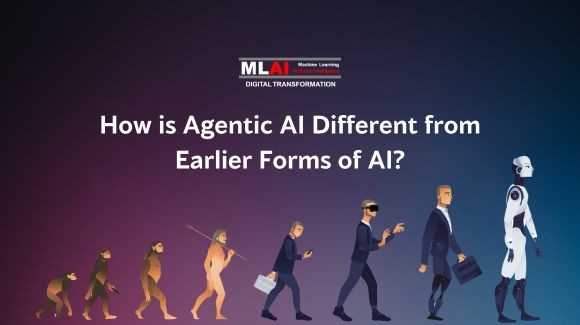
Artificial Intelligence has evolved significantly over the past few decades. Early AI systems were designed to follow strict rules and predefined logic. These systems were effective for repetitive tasks but lacked the ability to adapt or make independent decisions. Later, advancements in machine learning allowed AI models to analyze large datasets and generate predictions. The arrival of generative AI further transformed the landscape by enabling machines to create content such as text, images, and code.
However, the next major shift in artificial intelligence is happening with Agentic AI. Many organizations are now exploring Agentic AI vs Traditional AI to understand how intelligent systems are becoming more autonomous. Businesses are increasingly adopting autonomous AI agents that can plan tasks, make decisions, and execute actions without constant human guidance.
Many experts now believe agentic ai is different from earlier forms of ai because it moves beyond simple automation. Instead of responding only to prompts or predefined rules, these systems can analyze situations, plan workflows, and complete tasks independently. In this article, we will explore the evolution of AI, understand how agentic systems work, and examine why agentic ai is different from earlier forms of ai in modern digital environments.
1.The Evolution of Artificial Intelligence
To understand why agentic ai is different from earlier forms of ai, it is important to look at how artificial intelligence evolved over time. Each stage of AI development introduced new capabilities, eventually leading to the rise of agentic AI systems.
1.1 Rule-Based AI (The First Generation)
The earliest form of artificial intelligence relied heavily on predefined rules and logical instructions. These systems followed strict programming and could only operate within the limits set by developers. If a situation occurred outside the predefined rules, the system would fail to respond appropriately.
This approach is often discussed when comparing rule based ai vs agentic ai. Rule based AI systems cannot learn or adapt on their own. They simply follow instructions.
Examples of rule-based AI include spam filters, expert systems used in medical diagnostics, and simple automation tools used in enterprise workflows. These systems were useful for structured tasks but lacked flexibility.
This limitation highlights an important difference when analyzing Agentic AI vs Traditional AI. Traditional rule-based systems cannot think beyond their programming, while agentic AI systems can dynamically plan actions.
1.2 Machine Learning and Predictive AI
The next stage in AI development involved machine learning. Instead of relying only on fixed rules, machine learning models analyze data and identify patterns. These models can make predictions based on historical data.
Machine learning is widely used in applications such as recommendation engines, fraud detection systems, and risk scoring tools used by financial institutions. These systems improve performance as they receive more data.
Although machine learning systems are more advanced than rule-based AI, they still require human supervision. Developers must train models, define objectives, and monitor outcomes.
This stage improved automation but still does not match the capabilities of agentic systems. When comparing Agentic AI vs Traditional AI, machine learning systems still function as tools rather than autonomous decision makers.
1.3 Generative AI
Generative AI introduced another significant milestone. Models such as large language models can generate human-like text, images, videos, and code. Businesses began using generative AI for content creation, customer communication, and creative design.
However, when comparing generative ai vs agentic ai, an important difference becomes clear. Generative AI typically requires a user prompt to function. It can produce output but cannot independently decide what task to perform next.
For example, a generative AI chatbot can answer questions or write articles. However, it cannot independently plan a complex workflow such as conducting research, analyzing data, and producing insights without human instructions.
This is where the shift toward agentic systems becomes important. It demonstrates why agentic ai is different from earlier forms of ai and why organizations are exploring autonomous AI agents.
2.What is Agentic AI?
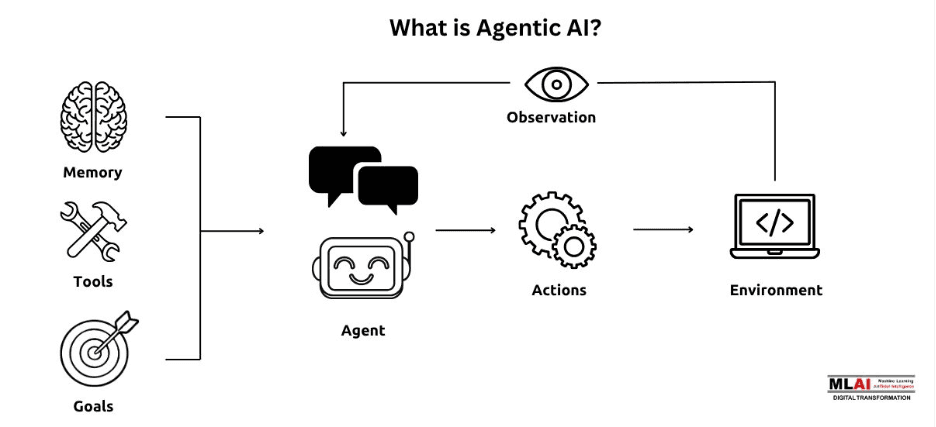
Agentic AI refers to intelligent systems that can independently plan tasks, make decisions, and execute actions to achieve a defined objective. Unlike earlier AI systems that depend heavily on prompts or predefined rules, agentic AI systems can analyze situations and determine the next steps.
These systems often operate through autonomous AI agents that act like digital workers. Instead of performing one task at a time, they manage entire workflows.
For example, imagine an AI assistant designed to generate a market research report. Instead of simply writing text, the agent could collect data, analyze market trends, identify competitors, and produce insights automatically.
This capability is a key reason why agentic ai is different from earlier forms of ai. The system does not just respond to instructions. It actively determines how to accomplish a goal.
Modern agentic ai systems are being integrated into enterprise platforms to automate research, operations, cybersecurity monitoring, and customer service.
3.How Agentic AI Works?
Understanding how agentic ai works helps explain why organizations see it as the future of intelligent automation. Agentic systems follow a structured workflow that allows them to operate independently.
Step 1: Goal Understanding
The process begins with defining an objective. The AI receives a goal such as generating a research report, analyzing financial data, or optimizing a supply chain process.
Once the goal is understood, the system begins planning how to achieve it.
Step 2: Planning
The AI breaks the objective into smaller tasks. For example, if the goal is to generate a market research report, the system might plan steps such as collecting data, analyzing trends, and generating insights.
This ability demonstrates why agentic ai is different from earlier forms of ai, since traditional AI typically performs single tasks rather than planning entire workflows.
Step 3: Tool Usage
Agentic systems can interact with external tools and platforms. These tools may include databases, APIs, software applications, or analytics systems.
The agent can search databases, retrieve information, run scripts, or interact with enterprise software to complete tasks.
Step 4: Continuous Decision Making
Throughout the process, the system evaluates results and adjusts its strategy. This dynamic reasoning process is part of agentic ai capabilities, allowing systems to adapt as new information becomes available.
This ability to continuously evaluate and act explains why agentic ai is different from earlier forms of ai.
4.Agentic AI Architecture
The agentic ai architecture is designed to support autonomous decision making and workflow execution. Several core components work together to make agentic systems functional.
4.1 Reasoning Engine
Most agentic systems use a large language model as the reasoning engine. This component interprets tasks, generates plans, and decides what actions to take.
4.2 Memory System
Memory allows the AI to retain information from previous steps. This helps the system maintain context and improve decision making.
4.3 Planning Module
The planning module divides complex tasks into manageable steps. This module ensures the agent can systematically complete workflows.
4.4 Tool Integration Layer
Agentic AI systems often interact with external tools. These integrations allow agents to retrieve data, execute operations, and automate business processes.
4.5 Execution Layer
The execution layer performs the actual actions. It may run scripts, interact with APIs, or trigger automated workflows.
This architecture enables agentic ai systems to behave like digital workers rather than simple chatbots. It also demonstrates why agentic ai is different from earlier forms of ai.
5.Agentic AI vs Traditional AI
Understanding Agentic AI vs Traditional AI is essential for recognizing how artificial intelligence is evolving. Traditional AI focuses on automation within predefined limits. Agentic AI focuses on autonomy and decision making.
Feature | Traditional AI | Agentic AI |
Task execution | Manual initiation | Autonomous workflows |
Decision making | Predefined rules | Dynamic reasoning |
Adaptability | Limited | High |
Workflow automation | Partial | End-to-end |
This comparison highlights why agentic ai is different from earlier forms of ai. Instead of acting as a tool controlled by humans, agentic AI can function as an independent system capable of managing complex tasks.
6.Key Agentic AI Capabilities
The rapid adoption of agentic technology is largely driven by its powerful capabilities. Unlike earlier AI systems that depend heavily on human instructions, agentic systems are designed to operate with a higher level of independence and reasoning. These capabilities allow organizations to automate complex workflows and improve decision making across different industries.
6.1 Autonomous Task Execution
Agentic systems can complete complex workflows without constant supervision. This makes them ideal for enterprise automation where multiple tasks need to be executed in sequence. For example, an agentic AI system can collect data, analyze it, generate insights, and deliver results without requiring manual intervention at each step.
6.2 Multi-Step Reasoning
These systems break problems into logical steps and solve them sequentially. Instead of generating a single response, the AI evaluates the problem, plans the required actions, and executes them step by step. This structured reasoning allows agentic AI to handle complicated tasks such as research analysis, operational planning, or technical troubleshooting.
6.3 Tool Integration
Agents can connect with APIs, enterprise software, analytics platforms, and databases. This ability allows them to interact with multiple digital systems and perform real-world actions such as retrieving data, triggering workflows, or updating records. As a result, agentic AI systems can function as intelligent digital workers within existing business environments.
6.4 Continuous Learning
With feedback loops and memory systems, agents improve performance over time. They can learn from previous interactions, adjust strategies, and refine their outputs to achieve better results. This adaptive capability allows organizations to deploy AI systems that continuously become more efficient and effective.
These capabilities demonstrate how agentic ai is different from earlier forms of ai and explain why many organizations are investing in advanced agentic AI frameworks to support intelligent automation.
7.Benefits of Agentic AI
Organizations are adopting agentic technology because it offers significant advantages compared to traditional automation systems. By enabling intelligent decision making and autonomous task execution, agentic AI systems help businesses operate more efficiently and respond faster to changing conditions.
7.1 Increased Productivity
Businesses can automate complex workflows that previously required manual effort. Tasks such as data analysis, reporting, and process management can now be handled by AI agents. This allows teams to complete projects faster and allocate more time to innovation and strategic planning.
7.2 Reduced Human Effort
Autonomous agents can handle repetitive tasks, allowing employees to focus on strategic work. Routine activities like monitoring systems, processing data, or managing customer queries can be performed by AI agents. This reduces workload pressure and improves overall workplace efficiency.
7.3 Faster Decision Making
Agentic systems analyze information in real time and generate actionable insights. By continuously monitoring data and identifying patterns, AI agents can help organizations make informed decisions quickly. This capability is especially valuable in industries where timing and accuracy are critical.
7.4 Scalable Automation
Companies can scale operations without proportionally increasing workforce size. Agentic AI systems can handle growing workloads without significant infrastructure changes. This makes it easier for organizations to expand services and manage larger operations efficiently.
These benefits of agentic ai explain why industries are rapidly investing in agentic platforms and integrating them into their digital transformation strategies.
8.Agentic AI Use Cases
Several industries are already exploring agentic ai use cases to improve efficiency, innovation, and operational performance. By deploying intelligent agents, organizations can automate processes that previously required continuous human involvement.
8.1 Customer Support Automation
Autonomous AI agents can manage customer queries, resolve issues, and escalate cases when necessary. They can analyze customer requests, access internal knowledge bases, and provide accurate responses instantly. This improves customer satisfaction while reducing the workload on support teams.
8.2 Financial Analysis
Agents can collect financial data, analyze market trends, and generate investment insights. By monitoring large volumes of financial information, agentic systems can help analysts identify opportunities, assess risks, and make better strategic decisions.
8.3 Software Development
Agentic systems can assist with writing code, testing applications, and deploying updates. They can review existing codebases, identify bugs, suggest improvements, and automate parts of the development lifecycle. This helps development teams accelerate software delivery.
8.4 Supply Chain Optimization
AI agents can monitor inventory levels, forecast demand, and automatically place orders when stock levels change. They can also track logistics data and identify potential disruptions in the supply chain. This ensures smoother operations and reduces delays.
These use cases highlight why agentic ai is different from earlier forms of ai in enterprise environments and why businesses are increasingly investing in autonomous AI agents.
9.Traditional AI Use Cases
Before the rise of agentic systems, many industries relied on traditional AI to improve efficiency and automate specific tasks. Traditional AI systems are designed to perform predefined functions based on trained models or programmed rules. While they are powerful tools for data analysis and prediction, they typically require human instructions and cannot independently plan or execute complex workflows.
9.1 Chatbots and Customer Support
Traditional AI chatbots are commonly used in customer support to answer frequently asked questions and guide users through basic processes. These systems rely on predefined responses or trained models to provide information. While they can handle simple queries efficiently, they usually require human agents to resolve complex issues.
9.2 Fraud Detection in Finance
Traditional AI is widely used in financial institutions to detect fraudulent transactions. Machine learning models analyze patterns in transaction data and flag suspicious activity. For example, if an unusual transaction occurs from a different location or device, the system may alert the bank or temporarily block the transaction.
9.3 Recommendation Systems
Many digital platforms use traditional AI to recommend products, movies, or content based on user behavior. Streaming services and e-commerce platforms analyze past interactions and preferences to suggest relevant items. These recommendation engines improve user engagement but typically operate within predefined algorithms.
9.4 Predictive Maintenance
In industries such as manufacturing and transportation, traditional AI helps predict equipment failures. Sensors collect machine data, and AI models analyze this data to identify patterns that indicate potential issues. This allows companies to perform maintenance before a failure occurs, reducing downtime and repair costs.
These traditional AI applications demonstrate how earlier AI systems focused on assisting human decision making and performing specific tasks. However, unlike modern autonomous systems, they do not independently plan or execute workflows. This difference further highlights why agentic ai is different from earlier forms of ai and why organizations are now exploring Agentic AI vs Traditional AI in enterprise environments.
10.Real World Applications of Agentic AI vs Traditional AI
Understanding Agentic AI vs Traditional AI becomes clearer when we look at how these technologies are used in real-world scenarios. Traditional AI systems usually perform specific tasks based on predefined rules or trained models, while agentic AI systems can plan, make decisions, and execute multiple actions to achieve a goal.
10.1 Customer Support Systems
Traditional AI chatbots can answer predefined questions or guide users through basic troubleshooting steps. However, in Agentic AI vs Traditional AI, agentic systems go a step further. For example, an agentic AI support assistant can analyze a customer's issue, access account data, initiate a refund process, and update the support ticket automatically without human intervention.
10.2 Financial Analysis
Traditional AI tools often analyze financial data and generate reports based on existing models. In contrast, agentic AI systems can gather market data, compare trends, perform risk analysis, and suggest investment strategies. For instance, an agentic AI financial assistant could monitor market fluctuations and recommend portfolio adjustments in real time.
10.3 Cybersecurity Monitoring
Traditional cybersecurity AI typically detects threats based on predefined patterns. However, when comparing Agentic AI vs Traditional AI, agentic systems can actively respond to threats. For example, an agentic AI security agent might detect suspicious network behavior, isolate affected systems, and notify the security team automatically.
10.4 Business Operations Management
Traditional AI systems may analyze operational data and generate insights. On the other hand, Agentic AI systems can manage workflows. For example, an agentic AI agent could monitor sales performance, adjust inventory levels, and coordinate with logistics systems to maintain supply chain efficiency.
These examples show how Agentic AI vs Traditional AI differs in real-world environments. Traditional AI mainly supports decision making, while agentic AI systems actively perform tasks and manage processes. This shift further explains why agentic ai is different from earlier forms of ai and why businesses are increasingly adopting autonomous AI agents.
11.Challenges of Agentic AI vs Traditional AI
When comparing Agentic AI vs Traditional AI, it is important to understand that both technologies come with their own challenges. While traditional AI systems are easier to control, agentic AI systems introduce new complexities because they can operate autonomously and make independent decisions.
11.1 Control and Oversight
Traditional AI systems follow predefined rules or trained models, which makes their behavior more predictable. In contrast, agentic AI systems can make dynamic decisions and perform multiple actions independently. This can make monitoring and controlling these systems more challenging.
11.2 Complexity of Implementation
Traditional AI solutions are usually designed for specific tasks such as predictions or recommendations. Agentic AI systems require more advanced infrastructure, including planning modules, memory systems, and tool integrations. This makes deployment and management more complex.
11.3 Risk of Incorrect Decisions
Traditional AI typically produces outputs based on existing data patterns, while agentic AI may take actions based on its reasoning process. If the system interprets data incorrectly, it could lead to unintended outcomes.
11.4 Security and Data Access Risks
Agentic AI systems often interact with multiple tools, APIs, and enterprise platforms. This increases the need for strong security measures to protect sensitive information and prevent misuse.
11.5 Regulation and Governance
As agentic systems become more autonomous, organizations must implement strict governance policies to ensure responsible use. Compared to traditional AI, agentic systems require stronger oversight and ethical guidelines.
12.The Future of Agentic AI Systems
The future of artificial intelligence is increasingly focused on autonomous decision making. Many experts believe that advanced agentic AI frameworks will drive the next phase of digital transformation.
12.1 AI Coworkers
Organizations may deploy AI coworkers that collaborate with humans, assist teams, and handle routine operational tasks. These systems can support employees by analyzing data and providing insights in real time.
12.2 Autonomous Business Operations
Many business processes may become automated through intelligent agentic AI systems that manage workflows, monitor performance, and improve efficiency without constant supervision.
12.3 Smarter Decision Making
Agentic systems will help businesses make faster and more accurate decisions by continuously analyzing large volumes of data and identifying patterns or opportunities.
12.4 Expansion of Enterprise AI
As research and development continue, more industries will adopt agentic technologies to improve productivity and operational efficiency.
These developments further show that agentic ai is different from earlier forms of ai and will play a major role in the future of enterprise technology.
Conclusion
Agentic AI represents a major shift in how intelligent systems operate. Unlike earlier AI models that rely on predefined rules or user prompts, agentic ai is different from earlier forms of ai because it can plan tasks, make decisions, and execute actions autonomously. When comparing Agentic AI vs Traditional AI, the key difference lies in autonomy and workflow management. Traditional AI mainly assists with predictions or content generation, while agentic systems can manage complex processes independently. As businesses continue adopting advanced AI technologies, agentic systems are expected to play a crucial role in driving automation, productivity, and smarter decision-making across industries.
Artificial Intelligence has evolved significantly over the past few decades. Early AI systems were designed to follow strict rules and predefined logic. These systems were effective for repetitive tasks but lacked the ability to adapt or make independent decisions. Later, advancements in machine learning allowed AI models to analyze large datasets and generate predictions. The arrival of generative AI further transformed the landscape by enabling machines to create content such as text, images, and code.
However, the next major shift in artificial intelligence is happening with Agentic AI. Many organizations are now exploring Agentic AI vs Traditional AI to understand how intelligent systems are becoming more autonomous. Businesses are increasingly adopting autonomous AI agents that can plan tasks, make decisions, and execute actions without constant human guidance.
Many experts now believe agentic ai is different from earlier forms of ai because it moves beyond simple automation. Instead of responding only to prompts or predefined rules, these systems can analyze situations, plan workflows, and complete tasks independently. In this article, we will explore the evolution of AI, understand how agentic systems work, and examine why agentic ai is different from earlier forms of ai in modern digital environments.
1.The Evolution of Artificial Intelligence
To understand why agentic ai is different from earlier forms of ai, it is important to look at how artificial intelligence evolved over time. Each stage of AI development introduced new capabilities, eventually leading to the rise of agentic AI systems.
1.1 Rule-Based AI (The First Generation)
The earliest form of artificial intelligence relied heavily on predefined rules and logical instructions. These systems followed strict programming and could only operate within the limits set by developers. If a situation occurred outside the predefined rules, the system would fail to respond appropriately.
This approach is often discussed when comparing rule based ai vs agentic ai. Rule based AI systems cannot learn or adapt on their own. They simply follow instructions.
Examples of rule-based AI include spam filters, expert systems used in medical diagnostics, and simple automation tools used in enterprise workflows. These systems were useful for structured tasks but lacked flexibility.
This limitation highlights an important difference when analyzing Agentic AI vs Traditional AI. Traditional rule-based systems cannot think beyond their programming, while agentic AI systems can dynamically plan actions.
1.2 Machine Learning and Predictive AI
The next stage in AI development involved machine learning. Instead of relying only on fixed rules, machine learning models analyze data and identify patterns. These models can make predictions based on historical data.
Machine learning is widely used in applications such as recommendation engines, fraud detection systems, and risk scoring tools used by financial institutions. These systems improve performance as they receive more data.
Although machine learning systems are more advanced than rule-based AI, they still require human supervision. Developers must train models, define objectives, and monitor outcomes.
This stage improved automation but still does not match the capabilities of agentic systems. When comparing Agentic AI vs Traditional AI, machine learning systems still function as tools rather than autonomous decision makers.
1.3 Generative AI
Generative AI introduced another significant milestone. Models such as large language models can generate human-like text, images, videos, and code. Businesses began using generative AI for content creation, customer communication, and creative design.
However, when comparing generative ai vs agentic ai, an important difference becomes clear. Generative AI typically requires a user prompt to function. It can produce output but cannot independently decide what task to perform next.
For example, a generative AI chatbot can answer questions or write articles. However, it cannot independently plan a complex workflow such as conducting research, analyzing data, and producing insights without human instructions.
This is where the shift toward agentic systems becomes important. It demonstrates why agentic ai is different from earlier forms of ai and why organizations are exploring autonomous AI agents.
2.What is Agentic AI?
Agentic AI refers to intelligent systems that can independently plan tasks, make decisions, and execute actions to achieve a defined objective. Unlike earlier AI systems that depend heavily on prompts or predefined rules, agentic AI systems can analyze situations and determine the next steps.
These systems often operate through autonomous AI agents that act like digital workers. Instead of performing one task at a time, they manage entire workflows.
For example, imagine an AI assistant designed to generate a market research report. Instead of simply writing text, the agent could collect data, analyze market trends, identify competitors, and produce insights automatically.
This capability is a key reason why agentic ai is different from earlier forms of ai. The system does not just respond to instructions. It actively determines how to accomplish a goal.
Modern agentic ai systems are being integrated into enterprise platforms to automate research, operations, cybersecurity monitoring, and customer service.
3.How Agentic AI Works?
Understanding how agentic ai works helps explain why organizations see it as the future of intelligent automation. Agentic systems follow a structured workflow that allows them to operate independently.
Step 1: Goal Understanding
The process begins with defining an objective. The AI receives a goal such as generating a research report, analyzing financial data, or optimizing a supply chain process.
Once the goal is understood, the system begins planning how to achieve it.
Step 2: Planning
The AI breaks the objective into smaller tasks. For example, if the goal is to generate a market research report, the system might plan steps such as collecting data, analyzing trends, and generating insights.
This ability demonstrates why agentic ai is different from earlier forms of ai, since traditional AI typically performs single tasks rather than planning entire workflows.
Step 3: Tool Usage
Agentic systems can interact with external tools and platforms. These tools may include databases, APIs, software applications, or analytics systems.
The agent can search databases, retrieve information, run scripts, or interact with enterprise software to complete tasks.
Step 4: Continuous Decision Making
Throughout the process, the system evaluates results and adjusts its strategy. This dynamic reasoning process is part of agentic ai capabilities, allowing systems to adapt as new information becomes available.
This ability to continuously evaluate and act explains why agentic ai is different from earlier forms of ai.
4.Agentic AI Architecture
The agentic ai architecture is designed to support autonomous decision making and workflow execution. Several core components work together to make agentic systems functional.
4.1 Reasoning Engine
Most agentic systems use a large language model as the reasoning engine. This component interprets tasks, generates plans, and decides what actions to take.
4.2 Memory System
Memory allows the AI to retain information from previous steps. This helps the system maintain context and improve decision making.
4.3 Planning Module
The planning module divides complex tasks into manageable steps. This module ensures the agent can systematically complete workflows.
4.4 Tool Integration Layer
Agentic AI systems often interact with external tools. These integrations allow agents to retrieve data, execute operations, and automate business processes.
4.5 Execution Layer
The execution layer performs the actual actions. It may run scripts, interact with APIs, or trigger automated workflows.
This architecture enables agentic ai systems to behave like digital workers rather than simple chatbots. It also demonstrates why agentic ai is different from earlier forms of ai.
5.Agentic AI vs Traditional AI
Understanding Agentic AI vs Traditional AI is essential for recognizing how artificial intelligence is evolving. Traditional AI focuses on automation within predefined limits. Agentic AI focuses on autonomy and decision making.
Feature | Traditional AI | Agentic AI |
Task execution | Manual initiation | Autonomous workflows |
Decision making | Predefined rules | Dynamic reasoning |
Adaptability | Limited | High |
Workflow automation | Partial | End-to-end |
This comparison highlights why agentic ai is different from earlier forms of ai. Instead of acting as a tool controlled by humans, agentic AI can function as an independent system capable of managing complex tasks.
6.Key Agentic AI Capabilities
The rapid adoption of agentic technology is largely driven by its powerful capabilities. Unlike earlier AI systems that depend heavily on human instructions, agentic systems are designed to operate with a higher level of independence and reasoning. These capabilities allow organizations to automate complex workflows and improve decision making across different industries.
6.1 Autonomous Task Execution
Agentic systems can complete complex workflows without constant supervision. This makes them ideal for enterprise automation where multiple tasks need to be executed in sequence. For example, an agentic AI system can collect data, analyze it, generate insights, and deliver results without requiring manual intervention at each step.
6.2 Multi-Step Reasoning
These systems break problems into logical steps and solve them sequentially. Instead of generating a single response, the AI evaluates the problem, plans the required actions, and executes them step by step. This structured reasoning allows agentic AI to handle complicated tasks such as research analysis, operational planning, or technical troubleshooting.
6.3 Tool Integration
Agents can connect with APIs, enterprise software, analytics platforms, and databases. This ability allows them to interact with multiple digital systems and perform real-world actions such as retrieving data, triggering workflows, or updating records. As a result, agentic AI systems can function as intelligent digital workers within existing business environments.
6.4 Continuous Learning
With feedback loops and memory systems, agents improve performance over time. They can learn from previous interactions, adjust strategies, and refine their outputs to achieve better results. This adaptive capability allows organizations to deploy AI systems that continuously become more efficient and effective.
These capabilities demonstrate how agentic ai is different from earlier forms of ai and explain why many organizations are investing in advanced agentic AI frameworks to support intelligent automation.
7.Benefits of Agentic AI
Organizations are adopting agentic technology because it offers significant advantages compared to traditional automation systems. By enabling intelligent decision making and autonomous task execution, agentic AI systems help businesses operate more efficiently and respond faster to changing conditions.
7.1 Increased Productivity
Businesses can automate complex workflows that previously required manual effort. Tasks such as data analysis, reporting, and process management can now be handled by AI agents. This allows teams to complete projects faster and allocate more time to innovation and strategic planning.
7.2 Reduced Human Effort
Autonomous agents can handle repetitive tasks, allowing employees to focus on strategic work. Routine activities like monitoring systems, processing data, or managing customer queries can be performed by AI agents. This reduces workload pressure and improves overall workplace efficiency.
7.3 Faster Decision Making
Agentic systems analyze information in real time and generate actionable insights. By continuously monitoring data and identifying patterns, AI agents can help organizations make informed decisions quickly. This capability is especially valuable in industries where timing and accuracy are critical.
7.4 Scalable Automation
Companies can scale operations without proportionally increasing workforce size. Agentic AI systems can handle growing workloads without significant infrastructure changes. This makes it easier for organizations to expand services and manage larger operations efficiently.
These benefits of agentic ai explain why industries are rapidly investing in agentic platforms and integrating them into their digital transformation strategies.
8.Agentic AI Use Cases
Several industries are already exploring agentic ai use cases to improve efficiency, innovation, and operational performance. By deploying intelligent agents, organizations can automate processes that previously required continuous human involvement.
8.1 Customer Support Automation
Autonomous AI agents can manage customer queries, resolve issues, and escalate cases when necessary. They can analyze customer requests, access internal knowledge bases, and provide accurate responses instantly. This improves customer satisfaction while reducing the workload on support teams.
8.2 Financial Analysis
Agents can collect financial data, analyze market trends, and generate investment insights. By monitoring large volumes of financial information, agentic systems can help analysts identify opportunities, assess risks, and make better strategic decisions.
8.3 Software Development
Agentic systems can assist with writing code, testing applications, and deploying updates. They can review existing codebases, identify bugs, suggest improvements, and automate parts of the development lifecycle. This helps development teams accelerate software delivery.
8.4 Supply Chain Optimization
AI agents can monitor inventory levels, forecast demand, and automatically place orders when stock levels change. They can also track logistics data and identify potential disruptions in the supply chain. This ensures smoother operations and reduces delays.
These use cases highlight why agentic ai is different from earlier forms of ai in enterprise environments and why businesses are increasingly investing in autonomous AI agents.
9.Traditional AI Use Cases
Before the rise of agentic systems, many industries relied on traditional AI to improve efficiency and automate specific tasks. Traditional AI systems are designed to perform predefined functions based on trained models or programmed rules. While they are powerful tools for data analysis and prediction, they typically require human instructions and cannot independently plan or execute complex workflows.
9.1 Chatbots and Customer Support
Traditional AI chatbots are commonly used in customer support to answer frequently asked questions and guide users through basic processes. These systems rely on predefined responses or trained models to provide information. While they can handle simple queries efficiently, they usually require human agents to resolve complex issues.
9.2 Fraud Detection in Finance
Traditional AI is widely used in financial institutions to detect fraudulent transactions. Machine learning models analyze patterns in transaction data and flag suspicious activity. For example, if an unusual transaction occurs from a different location or device, the system may alert the bank or temporarily block the transaction.
9.3 Recommendation Systems
Many digital platforms use traditional AI to recommend products, movies, or content based on user behavior. Streaming services and e-commerce platforms analyze past interactions and preferences to suggest relevant items. These recommendation engines improve user engagement but typically operate within predefined algorithms.
9.4 Predictive Maintenance
In industries such as manufacturing and transportation, traditional AI helps predict equipment failures. Sensors collect machine data, and AI models analyze this data to identify patterns that indicate potential issues. This allows companies to perform maintenance before a failure occurs, reducing downtime and repair costs.
These traditional AI applications demonstrate how earlier AI systems focused on assisting human decision making and performing specific tasks. However, unlike modern autonomous systems, they do not independently plan or execute workflows. This difference further highlights why agentic ai is different from earlier forms of ai and why organizations are now exploring Agentic AI vs Traditional AI in enterprise environments.
10.Real World Applications of Agentic AI vs Traditional AI
Understanding Agentic AI vs Traditional AI becomes clearer when we look at how these technologies are used in real-world scenarios. Traditional AI systems usually perform specific tasks based on predefined rules or trained models, while agentic AI systems can plan, make decisions, and execute multiple actions to achieve a goal.
10.1 Customer Support Systems
Traditional AI chatbots can answer predefined questions or guide users through basic troubleshooting steps. However, in Agentic AI vs Traditional AI, agentic systems go a step further. For example, an agentic AI support assistant can analyze a customer's issue, access account data, initiate a refund process, and update the support ticket automatically without human intervention.
10.2 Financial Analysis
Traditional AI tools often analyze financial data and generate reports based on existing models. In contrast, agentic AI systems can gather market data, compare trends, perform risk analysis, and suggest investment strategies. For instance, an agentic AI financial assistant could monitor market fluctuations and recommend portfolio adjustments in real time.
10.3 Cybersecurity Monitoring
Traditional cybersecurity AI typically detects threats based on predefined patterns. However, when comparing Agentic AI vs Traditional AI, agentic systems can actively respond to threats. For example, an agentic AI security agent might detect suspicious network behavior, isolate affected systems, and notify the security team automatically.
10.4 Business Operations Management
Traditional AI systems may analyze operational data and generate insights. On the other hand, Agentic AI systems can manage workflows. For example, an agentic AI agent could monitor sales performance, adjust inventory levels, and coordinate with logistics systems to maintain supply chain efficiency.
These examples show how Agentic AI vs Traditional AI differs in real-world environments. Traditional AI mainly supports decision making, while agentic AI systems actively perform tasks and manage processes. This shift further explains why agentic ai is different from earlier forms of ai and why businesses are increasingly adopting autonomous AI agents.
11.Challenges of Agentic AI vs Traditional AI
When comparing Agentic AI vs Traditional AI, it is important to understand that both technologies come with their own challenges. While traditional AI systems are easier to control, agentic AI systems introduce new complexities because they can operate autonomously and make independent decisions.
11.1 Control and Oversight
Traditional AI systems follow predefined rules or trained models, which makes their behavior more predictable. In contrast, agentic AI systems can make dynamic decisions and perform multiple actions independently. This can make monitoring and controlling these systems more challenging.
11.2 Complexity of Implementation
Traditional AI solutions are usually designed for specific tasks such as predictions or recommendations. Agentic AI systems require more advanced infrastructure, including planning modules, memory systems, and tool integrations. This makes deployment and management more complex.
11.3 Risk of Incorrect Decisions
Traditional AI typically produces outputs based on existing data patterns, while agentic AI may take actions based on its reasoning process. If the system interprets data incorrectly, it could lead to unintended outcomes.
11.4 Security and Data Access Risks
Agentic AI systems often interact with multiple tools, APIs, and enterprise platforms. This increases the need for strong security measures to protect sensitive information and prevent misuse.
11.5 Regulation and Governance
As agentic systems become more autonomous, organizations must implement strict governance policies to ensure responsible use. Compared to traditional AI, agentic systems require stronger oversight and ethical guidelines.
12.The Future of Agentic AI Systems
The future of artificial intelligence is increasingly focused on autonomous decision making. Many experts believe that advanced agentic AI frameworks will drive the next phase of digital transformation.
12.1 AI Coworkers
Organizations may deploy AI coworkers that collaborate with humans, assist teams, and handle routine operational tasks. These systems can support employees by analyzing data and providing insights in real time.
12.2 Autonomous Business Operations
Many business processes may become automated through intelligent agentic AI systems that manage workflows, monitor performance, and improve efficiency without constant supervision.
12.3 Smarter Decision Making
Agentic systems will help businesses make faster and more accurate decisions by continuously analyzing large volumes of data and identifying patterns or opportunities.
12.4 Expansion of Enterprise AI
As research and development continue, more industries will adopt agentic technologies to improve productivity and operational efficiency.
These developments further show that agentic ai is different from earlier forms of ai and will play a major role in the future of enterprise technology.
Conclusion
Agentic AI represents a major shift in how intelligent systems operate. Unlike earlier AI models that rely on predefined rules or user prompts, agentic ai is different from earlier forms of ai because it can plan tasks, make decisions, and execute actions autonomously. When comparing Agentic AI vs Traditional AI, the key difference lies in autonomy and workflow management. Traditional AI mainly assists with predictions or content generation, while agentic systems can manage complex processes independently. As businesses continue adopting advanced AI technologies, agentic systems are expected to play a crucial role in driving automation, productivity, and smarter decision-making across industries.
Related Blogs
Be the first to read our articles.

